
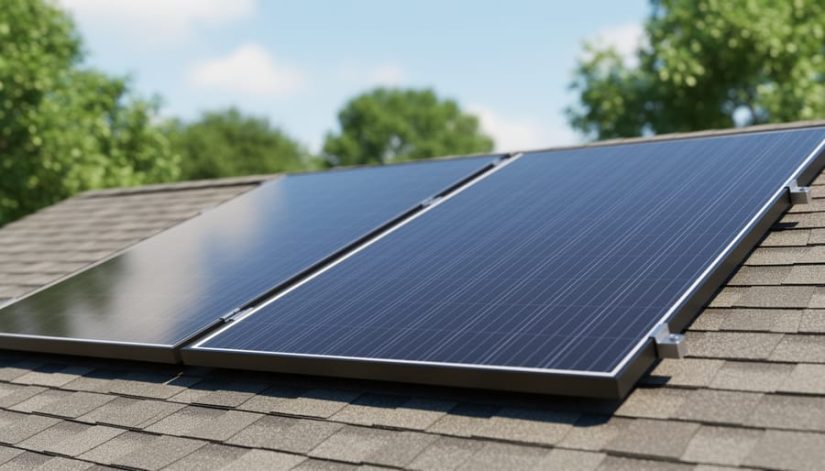
What Is the Latest Tech in Solar Panels (and How Does It Work)?
The latest tech in solar panels refers to commercially available advancements like TOPCon cells, bifacial modules, and perovskite-silicon tandems that have pushed efficiency ratings above 24% for residential systems in 2026, alongside emerging innovations such as transparent solar windows and flexible thin-film designs that are reshaping how we think about solar energy.
If you’re considering solar for your North Carolina home or business right now, you’re entering the market at an exciting time. The panels available today aren’t just incremental improvements over last year’s models. They capture more sunlight from both sides, maintain higher performance in our humid summers, and in some cases are manufactured right here in America by companies investing in domestic production.
This matters because the difference between older technology and what’s shipping in 2026 can mean 15-20% more electricity from the same roof space. For a typical household, that translates to faster payback periods and greater long-term savings. Business owners evaluating solar upgrades will find that newer panels often justify replacement even when existing systems still function, simply because the efficiency gains are that substantial.
We’ll walk you through what’s actually available now versus what’s still in the lab, explain how these technologies work without drowning you in jargon, and help you understand which innovations matter for your specific situation. You’ll learn the practical differences between TOPCon and traditional panels, why bifacial designs perform exceptionally well in certain installations, and what questions to ask installers about the latest equipment they’re recommending.
What the Newest Solar Panel Technology Actually Means
When solar companies talk about the “latest tech,” they’re referring to panels that can convert sunlight to electricity more efficiently than what most homes have installed right now. The newest technology widely available to homeowners today, called TOPCon, reaches 24 to 26% efficiency in commercial production, meaning it transforms nearly a quarter of incoming sunlight into usable power. That’s a substantial jump from older panels, many of which topped out at 17 to 20% efficiency.
This efficiency gain translates to tangible benefits for your home or business. The latest solar cell technology can generate 20 to 25% more electricity from the same rooftop space, which matters especially if you have limited south-facing roof area or partial shading from trees. For a typical residential installation, that extra output can mean the difference between covering 70% of your electricity needs versus nearly 100%.
What separates truly new technology from marketing hype is availability and cost-effectiveness. Lab records sound impressive, perovskite-silicon tandem cells have already broken 34% efficiency in certified lab conditions, but those aren’t on your installer’s truck yet. The newest technology you can actually buy combines better performance with manufacturing advances that keep prices competitive. TOPCon now dominates approximately 75% of new solar panel production globally and accounts for roughly 50% of all panel shipments, which means it’s a proven, scalable solution rather than an expensive prototype.
Real innovation shows up when higher efficiency becomes affordable enough for average homeowners, not just early adopters with unlimited budgets.
How Modern Solar Panels Work
Modern solar panels work through a process called the photovoltaic effect, where specialized materials convert sunlight directly into electricity. When photons from sunlight hit a solar cell, they knock electrons loose from atoms in the material, creating an electric current that flows through wiring to power your home or business.
The heart of most solar panels today is silicon, a semiconductor material that makes up the individual cells you see arranged in a grid pattern. Silicon-based cells contain two layers with opposite electrical charges. When sunlight strikes these layers, the freed electrons flow from one side to the other, generating direct current (DC) electricity that an inverter then converts to the alternating current (AC) your home uses.
- Photovoltaic cells
- The individual units within a solar panel that convert sunlight into electricity through the photovoltaic effect. Each cell typically produces about 0.5 volts, so they’re connected together to generate usable power.
- Silicon wafers
- Thin slices of crystallized silicon that form the base material for most solar cells. These wafers are chemically treated to create the positive and negative layers needed for electricity generation.
- TOPCon (Tunnel Oxide Passivated Contact)
- A newer cell design that adds ultra-thin oxide layers to reduce energy loss, allowing panels to reach 24-26% efficiency. This technology is now the dominant manufacturing standard in 2026.
- Bifacial panels
- Solar panels engineered to capture sunlight on both the front and back surfaces, generating additional power from reflected light. They’re particularly effective in ground-mount installations or over reflective surfaces.
What separates the latest panels from older technology is how they minimize energy loss. Traditional solar cells lose significant power as heat or through electrons recombining before they generate current. New cell designs like TOPCon add ultra-thin protective layers that guide electrons more efficiently, capturing energy that older panels would waste. This engineering advance explains how today’s panels can generate 20-25% more electricity from the same rooftop space.
Tandem cell structures take efficiency even further by stacking different materials that each capture different wavelengths of light. While perovskite-silicon tandem cells have reached 34% efficiency in lab testing, these represent tomorrow’s technology rather than what’s available for installation today. For North Carolina homeowners and businesses in 2026, the practical innovation is TOPCon technology manufactured at scale, often in American facilities that combine advanced automation with quality control to produce reliable, high-performance panels.
Types of Cutting-Edge Solar Panel Technology in 2026
TOPCon Panels: The New Standard
TOPCon panels represent the biggest shift in residential solar technology since PERC cells dominated the market five years ago. Short for Tunnel Oxide Passivated Contact, this technology uses an ultra-thin layer of silicon oxide to reduce energy loss at the cell’s surface. That improvement translates directly into more electricity from your North Carolina rooftop, these panels consistently hit 24% to 26% efficiency in commercial production, making them the most advanced option you can actually buy and install today.
The market has moved decisively toward TOPCon. This technology now dominates approximately 75% of new solar panel production globally and accounts for roughly 50% of all panel shipments in 2025 and 2026. Manufacturers invested heavily in TOPCon production lines because the efficiency gains are real and the manufacturing process builds on existing infrastructure, keeping costs reasonable.
For homeowners in North Carolina, that efficiency advantage matters most when roof space is limited. The latest solar cell technology can generate 20-25% more electricity from the same rooftop space compared to older panels. A typical 6 kilowatt system that once needed 18 older panels might now need just 15 TOPCon panels, leaving room for future expansion or avoiding shaded areas altogether.
The cost-effectiveness is what makes TOPCon the practical choice right now. You’re getting laboratory-grade performance from five years ago at today’s competitive prices. While perovskite-silicon tandem cells have already broken 34% efficiency in certified lab conditions, those aren’t commercially available yet. TOPCon strikes the sweet spot between cutting-edge performance and real-world affordability, which is why we recommend it for most residential and commercial installations.
Bifacial Solar Panels
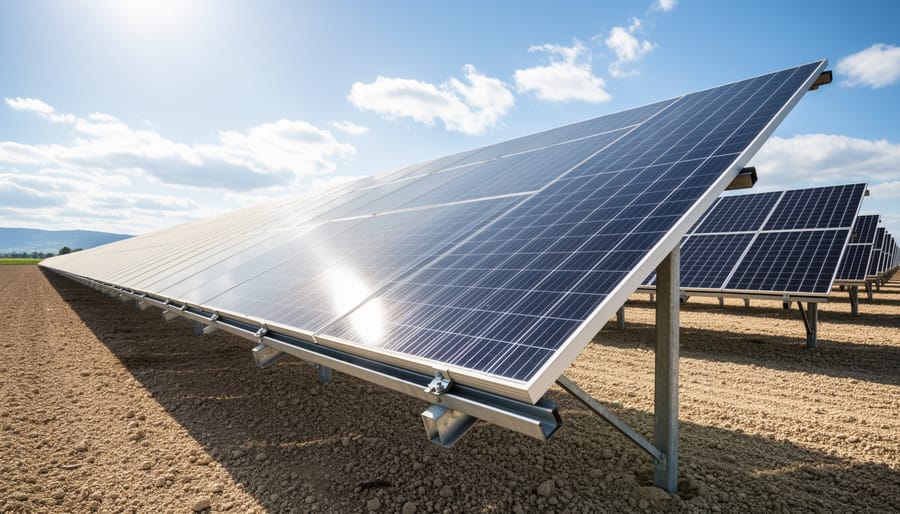
Bifacial solar panels capture sunlight on both the front and back surfaces, generating electricity from reflected light that traditional panels waste. Unlike standard panels with an opaque backing, bifacial modules use transparent rear sheets or dual glass construction that allow light to pass through and strike photovoltaic cells from underneath. When installed over reflective surfaces like white roofs, light-colored gravel, or concrete, these panels can produce 10 to 30 percent more energy than conventional single-sided designs in the same space.
These dual-sided panels make the most sense for ground-mount installations where sunlight bounces off the ground below, commercial flat rooftops with white membrane surfaces, and carport structures where light reflects from pavement. Residential rooftop applications see smaller gains unless the roof uses highly reflective materials or the panels are tilted to create space for rear-side exposure. Agricultural solar projects and utility-scale arrays increasingly favor bifacial technology because the efficiency boost justifies slightly higher upfront costs.
The panels ship at scale now from major manufacturers, making them a practical choice rather than an experimental upgrade. Installation does require attention to mounting height and ground surface conditions to maximize rear-side generation. Snow cover, for instance, can temporarily boost output as sunlight reflects off white surfaces below. For North Carolina business owners with large ground areas or flat commercial roofs, bifacial panels deliver measurably more power without requiring additional space, a meaningful advantage when property constraints limit system size.
Perovskite-Silicon Tandem Cells
Perovskite-silicon tandem cells stack two light-absorbing layers on top of each other, a traditional silicon base topped with a thin perovskite film. Silicon captures red and infrared light efficiently, while perovskite excels at harvesting blue and green wavelengths. By pairing them, researchers have achieved 34% efficiency in certified laboratory testing, breaking the theoretical limit of silicon-only cells (around 29%). That’s a meaningful leap: a 34% efficient panel generates roughly 40% more electricity than today’s best commercial modules from the same roof space.
Right now, tandem cells remain in the lab-to-market transition. Manufacturing challenges, especially ensuring perovskite layers remain stable through decades of heat, moisture, and UV exposure, have kept them from residential shelves. Early production lines are testing durability and cost-reduction techniques, but you won’t find certified tandem panels for North Carolina home installations in 2026.
That said, they represent the next frontier. If manufacturers solve the longevity puzzle and scale production affordably, homeowners could see 35%-plus efficiency panels within five to seven years. For properties with limited roof area or high shading, that efficiency gain would be transformative, turning previously marginal sites into strong solar candidates.
Transparent Solar Windows
Transparent solar windows represent one of the most promising frontiers in solar technology. Unlike traditional panels mounted on roofs, these systems use semi-transparent photovoltaic coatings applied to ordinary glass that capture ultraviolet and infrared light while letting visible light pass through. The technology is moving from research labs into real buildings, with early installations appearing in commercial skyscrapers and institutional projects where large glass facades offer significant energy-generation potential. For North Carolina businesses, this means future office buildings could generate their own power without sacrificing natural lighting or views. Residential applications remain several years away from widespread availability, as manufacturers work to balance efficiency, transparency, and cost. Current systems generate less electricity per square foot than rooftop panels, but they create value by turning otherwise passive windows into energy assets. As production scales up and costs drop, transparent solar windows could become a practical option for new construction and major renovations, particularly for buildings with limited roof space but extensive glazing.
How the Latest Solar Panels Are Used
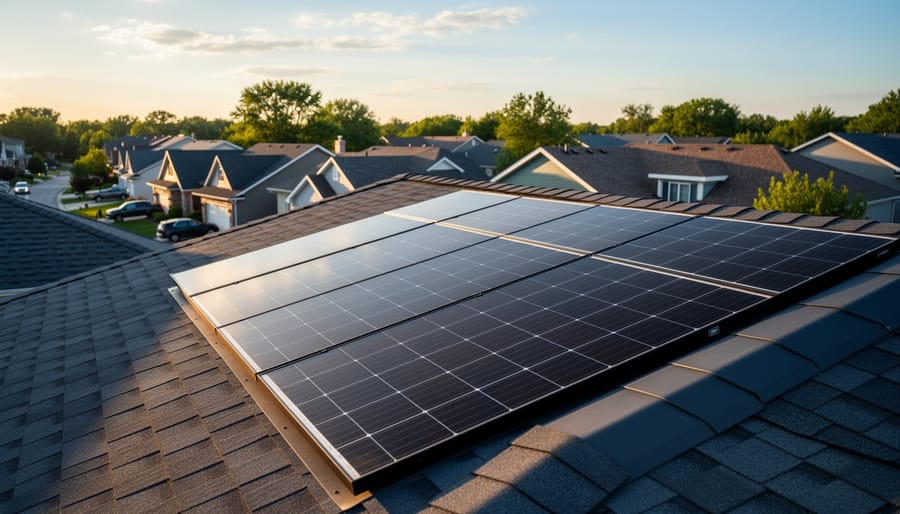
The latest solar panel technology fits a surprising range of real-world applications across North Carolina, and the 20-25% efficiency gains mean you can generate substantially more power even when roof space or sunlight is limited. Where older homes might have struggled to meet their energy needs with first-generation panels, today’s TOPCon and bifacial designs can deliver the same output from a smaller footprint, often the difference between offsetting 60% of your electric bill and reaching true energy independence.
Residential rooftop installations remain the most common application, especially for homeowners replacing aging systems or adding solar for the first time. The 24-26% efficiency of modern panels matters most when your roof faces less-than-ideal directions, sits partially shaded by trees, or simply can’t accommodate a full-size array. A 6-kilowatt system using the latest technology can produce what an older 8-kilowatt system delivered five years ago, fitting comfortably on ranch-style homes and bungalows that previously didn’t have enough usable roof area.
Commercial solar arrays benefit even more dramatically. Warehouses, office buildings, and retail centers can install panels across flat rooftops and generate enough electricity to cover daytime operations, and higher efficiency translates directly to faster payback periods. Ground-mount systems work well for businesses with open land or farms looking to diversify income; bifacial panels perform particularly well in these setups because light reflects off the ground and hits the back side of each panel, boosting total output by 10-15%.
- Residential retrofits on older homes with limited roof space or partial shading
- New construction where builders integrate solar into the design from day one
- Commercial warehouses and distribution centers with large, flat rooftops
- Carport structures that generate electricity while shading vehicles
- Agricultural applications for farms powering irrigation or processing equipment
- Community solar projects where multiple households share a single off-site array
Building-integrated photovoltaics represent the cutting edge, panels that replace traditional roofing materials or transparent solar windows that generate power from vertical glass surfaces. These applications remain less common in North Carolina but offer architects and developers new ways to incorporate energy generation into building design without sacrificing aesthetics. The technology is particularly promising for urban commercial projects where every square foot counts and conventional rooftop space runs out quickly.
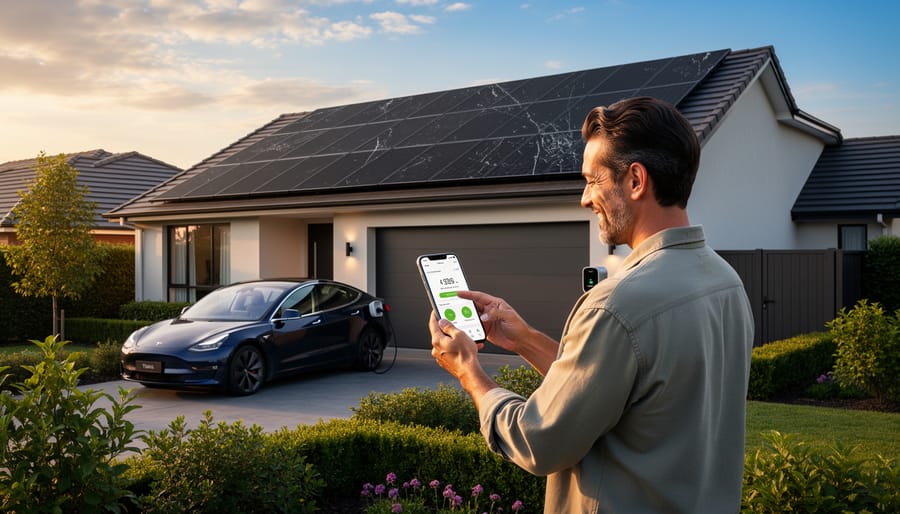
What Makes the Best Solar Panels in 2026
Choosing the best solar panels means looking beyond marketing claims to the features that genuinely matter for your North Carolina home or business. Start with efficiency ratings. In 2026, look for panels hitting 24% to 26% in commercial production, the current standard for top-tier TOPCon technology. Higher efficiency translates directly into more electricity from your available roof space, which is especially valuable if you have limited square footage or partial shading from trees.
Warranties tell you what manufacturers really believe about their products. Quality panels typically carry 25-year performance warranties guaranteeing at least 85% output after a quarter-century, plus 10 to 15 years of product coverage against defects. Read the fine print: some warranties require specific installers or maintenance schedules.
Pricing varies widely, but the cheapest option rarely delivers the best value. Calculate cost per watt of actual generation over the system’s lifetime, not just upfront price. Factor in that higher-efficiency panels often cost less to install because you need fewer of them, which reduces racking, wiring, and labor expenses.
Domestic content matters for both incentives and supply chain reliability. American-made panels may qualify for enhanced tax credits under federal programs, and you are supporting local manufacturing jobs. We prioritize products made in the United States whenever possible because they typically meet stricter quality standards and reduce dependence on overseas supply chains.
North Carolina weather demands durability. Look for panels rated for high wind loads (over 140 mph), tested for hail impact, and certified for humidity resistance. Finally, check manufacturer reputation through independent reviews, industry certifications, and how long they have been in business. A 30-year warranty means nothing if the company folds in five years.
Common Questions About the Latest Solar Panel Technology
What is the newest solar panel technology available right now?
TOPCon is the newest solar panel technology widely available to homeowners and businesses in 2026, dominating approximately 75% of new production globally. These panels deliver 24-26% efficiency while maintaining cost-effectiveness, making them a practical upgrade over older PERC technology without waiting for lab innovations to reach the market.
How do efficiency ratings translate to real savings?
Higher efficiency means more electricity from the same roof space. If you install panels with 25% efficiency instead of 20%, you generate roughly 25% more power from your available area, which means faster payback on your investment and more offset against your electric bill. For North Carolina homes with limited south-facing roof space or partial shading, that extra output can make the difference between meeting 80% or 100% of your energy needs.
Are the latest panels worth the investment over older models?
If you’re installing a new system, yes, the cost premium for TOPCon over older technology is minimal, and the 20-25% efficiency gain pays for itself through higher production. If you already have a working system less than ten years old, retrofitting probably doesn’t make financial sense unless your panels are underperforming or damaged. Focus new technology on new installs or full system replacements.
How long do new high-efficiency panels last?
Modern TOPCon and bifacial panels come with 25-year performance warranties, just like previous generations, and manufacturers typically guarantee they’ll still produce at least 85-90% of their original output after that period. The improved cell design doesn’t shorten lifespan; in many cases, better manufacturing quality and materials make newer panels more durable in North Carolina’s weather conditions.
Another common question we hear: Can I retrofit my existing system with newer panels? The short answer is maybe, but it’s complicated. Solar systems are engineered as complete units, panels, inverters, wiring, and mounting hardware all sized to work together. Swapping in higher-efficiency panels means your inverter might not handle the increased voltage, your electrical permit might need updating, and your roof attachments may not fit the new panel dimensions. You’d also create a mismatched system where some panels produce more than others, which can create performance issues.
If your current panels are working fine, leave them alone and maximize your savings. If you’re expanding your array or replacing failed equipment, that’s when upgrading to the latest technology makes sense. A qualified installer can assess whether your existing infrastructure supports newer panels or whether you’re better off waiting for a full system replacement down the road.
The solar panel industry has reached a turning point in 2026. Homeowners and businesses no longer need to choose between cutting-edge performance and practical availability. TOPCon panels delivering 24-26% efficiency are here now, installed on rooftops across North Carolina every week. Bifacial designs are shipping at scale for properties with the right setup. These aren’t experimental technologies, they’re proven products generating 20-25% more electricity from the same space your older panels occupied.
The horizon looks even brighter. Perovskite-silicon tandem cells breaking 34% efficiency in certified testing and transparent solar windows moving into real buildings signal that today’s impressive gains are just the beginning.
At Solar Installer Ninja, we’re committed to cutting through the hype and helping our community understand what’s actually available and worth considering. We prioritize American-made products because quality manufacturing matters for long-term performance, and we believe North Carolinians should benefit from technology made right here at home.
If you’ve been waiting for solar technology to mature, that moment has arrived. The question isn’t whether the latest panels work better, it’s whether they fit your energy goals, your property, and your budget. We’re here to help you figure that out.
