
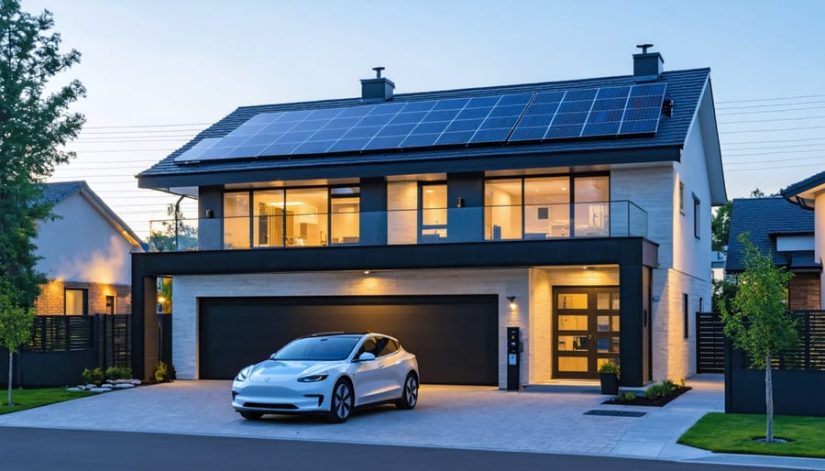
Why Solar Panel Loans Beat Payday Loans (And Save You Thousands)
Compare solar financing platforms before submitting applications—just give it details, it will find the best loan options tailored to your credit profile and energy goals. Unlike payday loans that extract wealth through triple-digit interest rates, solar panel loans function as strategic investments that reduce monthly expenses while building home equity.
**Here’s what separates solar financing from predatory lending:** Solar loans typically offer 5-25 year terms with fixed rates between 3-8%, while payday loans demand repayment within weeks at APRs exceeding 400%. Your solar system generates measurable returns—most North Carolina homeowners save $20,000-$40,000 over system lifetimes—while payday loans create debt spirals that drain resources.
Legitimate solar financing requires credit checks, income verification, and property assessments because lenders recognize they’re funding an appreciating asset attached to your home. These loans often feature no prepayment penalties, and your panels produce immediate utility savings that offset monthly payments. Some programs even structure payments to ensure your energy savings exceed loan costs from day one.
**The fundamental difference matters:** Payday loans prey on financial emergencies. Solar loans enable wealth creation through reduced electricity costs, federal tax credits worth 30% of system costs, and property value increases averaging $15,000-$20,000. You’re not borrowing to survive until next Friday—you’re financing a 25-year income-generating asset that delivers environmental benefits while protecting against utility rate increases that average 3-5% annually in our region.
What Makes Solar Panel Loans Different from Payday Loans

The Investment vs. The Emergency
The fundamental difference between solar panel loans and payday loans comes down to what you’re financing. When you take out a solar loan, you’re investing in a tangible asset that begins working for you immediately. Those American-made solar panels on your roof start generating electricity from day one, reducing your monthly utility bills and potentially earning you credits through North Carolina’s net metering programs.
Think of it this way: a solar loan helps you purchase equipment that actively creates value month after month, year after year. Most solar panel systems last 25-30 years, meaning decades of savings on your electricity costs. The loan pays for itself through those reduced bills, and once it’s paid off, you enjoy essentially free electricity for years to come.
Payday loans, on the other hand, typically address short-term cash emergencies without building any long-term financial benefit. You’re borrowing against future income to cover immediate needs, creating a cycle that can be difficult to escape. There’s no asset at the end, no ongoing savings, and no lasting value creation. Solar financing transforms a monthly expense into an investment that strengthens your financial position while supporting cleaner energy for your community.
Interest Rates That Actually Make Sense
Let’s talk numbers that might surprise you. Solar panel loans typically come with interest rates between 3-8%, which is worlds apart from payday loans that can charge 400% APR or higher. Here’s what that means for your wallet:
Say you finance a $20,000 solar system. With a solar loan at 5% interest over 15 years, you’d pay roughly $8,700 in interest. That same amount borrowed through high-interest lenders at 400% APR would cost you tens of thousands more in just months—making it nearly impossible to repay.
The key difference? Solar loans are designed as investments that add value to your home while reducing your monthly electric bills. Many North Carolina homeowners find their monthly loan payments are offset by energy savings, meaning the system essentially pays for itself over time. You’re not borrowing to cover an emergency; you’re investing in equipment—often American-made—that generates real returns.
Unlike short-term, high-interest borrowing that creates debt cycles, solar financing builds equity. That’s a fundamental difference worth understanding as you explore your options.
How Online Solar Panel Loans Actually Work
The Simple Application Process
Applying for a solar panel loan online is straightforward and typically takes just minutes to complete. Most lenders allow you to submit applications through their websites or mobile apps, where you’ll provide basic information about your home, income, and the solar system you’re considering. Unlike payday loans that may approve anyone regardless of repayment ability, legitimate solar lenders conduct responsible assessments to ensure the loan benefits you long-term.
Most solar loan programs look for credit scores starting around 650, though some American-made solar financing options may work with homeowners who have lower scores when combined with steady income verification. You’ll typically need to provide recent pay stubs, tax returns, or bank statements to confirm your ability to comfortably manage payments. This verification process protects you from taking on debt you can’t afford—a stark difference from predatory lending practices.
The timeline from application to approval usually ranges from same-day decisions to 72 hours for more complex situations. Once approved, funding often occurs within a week, allowing your installation to proceed quickly. This efficient process helps North Carolina homeowners start generating clean energy and saving money sooner rather than later.

Understanding Your Loan Terms
Solar panel loans typically come with term lengths between 10-25 years, aligning with your system’s warranty period. This structure differs completely from short-term payday loans—you’re making a long-term investment in your property rather than borrowing for immediate expenses.
**Secured vs. unsecured options** affect your rates significantly. Secured loans use your home as collateral and offer lower interest rates (typically 3-8%), while unsecured loans require no collateral but carry higher rates. Both options exist specifically to help you transition to clean energy without upfront costs.
**Fixed-rate loans** protect you from market fluctuations, keeping your monthly payment predictable throughout the term. Variable rates may start lower but can increase over time, affecting your long-term savings calculations.
When evaluating offers, compare the total loan cost against your projected energy savings. Quality matters here—financing American-made equipment often qualifies for additional tax incentives and typically includes stronger warranties, protecting your investment better than budget alternatives.
Monthly payments should be comparable to or lower than your current electricity bill, meaning you’re building equity instead of just paying your utility company. Calculate the “solar-plus-loan” cost versus your current energy expenses to see your real monthly savings from day one.
From Approval to Installation
Once your solar loan is approved, the lender typically disburses funds directly to your chosen installer or to you, depending on the loan structure. Many lenders release payment in stages—an initial deposit to begin work, then subsequent payments as the solar installation process reaches specific milestones. This protects both you and the installer.
Your installer will coordinate permits, inspections, and the actual installation of your American-made solar panels. This timeline usually spans 6-12 weeks from approval to activation. Most lenders don’t require payments until your system is fully operational and connected to the grid, giving you time to ensure everything works properly. Some loans even defer the first payment for 60-90 days post-installation, allowing you to start generating solar savings before payments begin—a stark contrast to predatory payday loans that demand immediate repayment.
The Real Math Behind Solar Financing
Your Monthly Payment vs. Your Energy Savings
Let’s look at real North Carolina numbers to see how solar loans work in your favor. For a typical 6kW system—one of the most common average system sizes for North Carolina homes—the total cost runs around $15,000 after the federal tax credit. With a 15-year solar loan at 6% interest, your monthly payment would be approximately $127.
Now compare that to what you’re paying Duke Energy or your local utility. The average North Carolina household pays about $135 monthly for electricity. Right from month one, you’re essentially breaking even or coming out ahead. As electricity rates continue climbing (they’ve increased roughly 3% annually), your locked-in loan payment stays the same while your savings grow larger each year.
For larger solar systems around 10kW—common for bigger homes or those with electric vehicles—the monthly loan payment might reach $210, but you’re eliminating electric bills that often exceed $225. Once your loan is paid off, those savings become pure profit in your pocket. Many North Carolina families find their systems pay for themselves within 7-10 years, then provide free electricity for decades afterward.
Tax Credits and Incentives That Lower Your Cost
One of the most compelling reasons solar loans make financial sense is the substantial tax credits and incentives that dramatically reduce your actual cost. The federal Investment Tax Credit (ITC) currently allows you to claim 30% of your total solar installation cost as a credit on your federal taxes. For a typical $20,000 system, that’s $6,000 back in your pocket—effectively lowering your loan principal when you apply that refund toward your balance.
Here in North Carolina, additional state-level incentives sweeten the deal even further. While specific programs vary by county and utility provider, many homeowners qualify for property tax exemptions on the added home value from solar installation. Your system increases property value without increasing your tax bill—a benefit that continues year after year.
When you factor in these incentives, the actual amount you’re financing becomes significantly smaller. That $20,000 loan effectively becomes $14,000 after the federal credit, which accelerates your payback timeline considerably. Unlike payday loans that compound costs through fees and interest, solar loans benefit from upfront incentives that reduce what you owe. We’re proud to help North Carolina families navigate these programs and maximize every available dollar, making American-made solar technology more accessible to our community.
Protecting Yourself: What to Look for in Solar Lenders
Red Flags That Signal Predatory Lending
When exploring solar financing options, it’s important to recognize warning signs that may indicate predatory lending practices. Be cautious of lenders who pressure you to sign immediately without giving you time to review documents thoroughly or compare offers. Legitimate solar financing should never feel rushed.
Watch for hidden fees buried in the fine print, including application charges, prepayment penalties, or unusually high origination fees. Transparent lenders clearly explain all costs upfront. If terms seem confusing or the lender avoids answering direct questions about interest rates and total loan costs, that’s a significant red flag.
Be skeptical of offers that seem too good to be true, such as “zero-cost solar” without clear explanations of how savings work, or promises of unrealistic energy production. Reputable companies provide honest projections based on your specific property and local conditions here in North Carolina.
Another warning sign is lenders who don’t verify your ability to repay or who push you toward loan amounts beyond your budget. Quality solar providers prioritize finding solutions that genuinely benefit your household financially, not just closing a sale. Always request multiple quotes and take time to understand exactly what you’re signing.
Questions Every Borrower Should Ask
Before signing any solar loan agreement, protect yourself by asking these important questions. **What is the APR?** This single number tells you the true cost of borrowing, including interest and fees—anything above 8-9% deserves scrutiny. **Are there prepayment penalties?** You should have the freedom to pay off your loan early without extra charges if your financial situation improves.
**What is my total loan cost over the full term?** Understanding the complete picture helps you compare options fairly and ensure your solar investment makes financial sense. **Does the lender have a strong reputation?** Check reviews, verify their Better Business Bureau rating, and ask neighbors who’ve gone solar about their experiences.
Additional critical questions include: Will I own the panels outright once the loan is paid? What happens if I sell my home? Are there any hidden fees or insurance requirements? Does the loan amount cover installation and permits?
Remember, legitimate solar loans are long-term investments in your property and energy independence—they should never resemble the structure of short-term, high-interest payday loans. Take your time reviewing terms, and don’t hesitate to walk away from deals that feel rushed or unclear.
Alternatives and Options for Every Budget
Solar Leases and Power Purchase Agreements
If you’re concerned about upfront costs, solar leases and Power Purchase Agreements (PPAs) offer no-money-down alternatives to traditional loans. With these options, a solar company installs panels on your property at no initial cost, and you either pay a fixed monthly lease payment or pay only for the electricity the system generates at a predetermined rate.
Unlike solar loans where you own the equipment and build equity, leases and PPAs mean the solar company retains ownership. This affects your long-term savings and eligibility for federal tax credits—the company claims those benefits, not you. However, these arrangements can be excellent choices if you don’t qualify for traditional financing, want predictable energy costs without maintenance responsibilities, or need immediate relief from high electricity bills.
For North Carolina homeowners and businesses, it’s worth comparing the total costs over 20-25 years. While leases and PPAs eliminate the burden of system maintenance and monitoring, ownership through a loan typically provides greater financial returns and increases your property value. These no-money-down options work best when your primary goal is reducing monthly utility expenses rather than maximizing long-term investment returns or supporting American-made solar manufacturing through direct ownership.
Cash Purchase and Home Equity Options
If you have substantial savings available, purchasing your solar panel system outright eliminates interest charges and maximizes your long-term return on investment. You’ll immediately own your system and qualify for federal tax credits without monthly payments. This straightforward approach works well for homeowners who’ve saved specifically for energy upgrades.
Home equity loans and HELOCs (Home Equity Lines of Credit) offer another path to solar financing. These options typically provide lower interest rates than unsecured loans since your home serves as collateral. You’ll receive the full loan amount upfront with a home equity loan, while a HELOC functions more like a credit line you can draw from as needed during installation.
However, dedicated solar loans often prove more advantageous than home equity options. Solar-specific financing typically doesn’t require collateral, protecting your home if unexpected financial challenges arise. Many solar loans also feature longer terms specifically structured around your system’s energy savings, making monthly payments more manageable. Additionally, some solar lenders streamline the process to align with installation timelines, whereas home equity applications can take several weeks. Consider your complete financial picture—including existing debt and emergency savings—before deciding which approach best supports your renewable energy goals.
Why Supporting American-Made Solar Makes Financial Sense
When you finance solar panels, you’re making a long-term investment in equipment that needs to perform reliably for 25-30 years. At Solar Installer Ninja, we believe choosing American-made equipment creates a stronger financial foundation for your solar loan investment.
American-made solar panels typically come with superior warranty protection compared to imported alternatives. When issues arise, you’re dealing with companies operating under U.S. consumer protection laws, making warranty claims more straightforward and reliable. This matters significantly when you’re financing your system—you want assurance that your investment is protected throughout your loan term and beyond.
The quality standards for domestically manufactured panels often exceed international minimums, meaning your system maintains efficiency longer. Since your loan payments are fixed while your panels generate savings, better long-term performance translates directly to greater lifetime value.
There’s also a community economic aspect worth considering. When you choose American-made solar, you’re supporting manufacturing jobs and keeping more money circulating in the U.S. economy. For North Carolina residents, this commitment strengthens our regional economy while delivering the environmental benefits we all share.
Unlike short-term payday loans that extract value from communities, solar loans with American-made equipment build lasting value—for your household finances, your property, and your local economy. It’s an investment structure that makes sense from every angle.
Solar panel loans represent something fundamentally different from payday loans—they’re investment tools that build equity in your home while generating real savings on your energy bills month after month. While payday loans trap borrowers in cycles of debt, solar financing helps you take control of your energy costs and increase your property value. The key difference couldn’t be clearer: one depletes your finances, while the other strengthens them.
As you consider making the switch to solar energy, take time to educate yourself about your options. Understanding the various financing pathways—from traditional loans to leases and power purchase agreements—empowers you to make the best choice for your situation. Working with trusted local installers who prioritize transparency and community education ensures you’re getting honest guidance rather than high-pressure sales tactics.
If you’re curious about whether solar makes sense for your North Carolina home or business, exploring your options is a smart first step. The solar industry has matured significantly, with American-made products and competitive financing making clean energy more accessible than ever. By asking questions and comparing offers from reputable installers, you’ll discover how solar can work within your budget while contributing to a more sustainable future.
