
9 Carbon Reduction Strategies North Carolina Homes and Businesses Can Start Now
The fastest way to cut your carbon footprint is to start with the cheapest fixes, like an energy audit, air sealing, LED lighting, and a smart thermostat, then move toward bigger upgrades such as American-made solar panels, solar water heating, and a heat pump. That order works because the small steps cost little, often pay for themselves quickly, and show you exactly where your next dollar will do the most good. Many North Carolina homeowners and business owners find that the first few changes shrink their energy use enough to make the larger investments smaller and easier to afford.
Our summer humidity and mild winters mean heating and cooling drive much of what we use, so a few smart moves can go a long way here. You’ll find nine practical strategies below, arranged from simple weekend projects to long-term upgrades, along with the criteria we used to choose them. Along the way, we’ll explain any technical terms in plain language. Understanding what each step does is just as valuable as the step itself, which is why green energy education sits at the heart of how we help our neighbors make confident choices. Pick the ideas that fit your budget today, and come back to the rest as your goals grow.
How We Chose These Carbon Reduction Strategies
Not every idea belongs on a list like this, so here’s how we sorted them. Whether you’re a homeowner or run a small shop, we want you to find steps you can really take. If you’re ready to reduce your footprint these four questions guided every pick:
- Impact: does it meaningfully lower the emissions tied to your energy and daily habits?
- Practicality for North Carolina: does it suit our hot summers, mild winters, and local utility options?
- Cost and payback: how does the upfront price compare with savings over time?
- Ease of getting started: can a homeowner or small business owner begin without a huge project?
You’ll notice the list isn’t all solar. Efficiency upgrades, smart habits, and better transportation choices often cut emissions faster and cheaper, and they make any later clean energy investment work harder. We also respect that other energy sources still play a real role in keeping homes comfortable and businesses running, so nothing here asks you to abandon what works today.
We’ve arranged the strategies roughly from quick, low-cost wins to larger long-term upgrades. Start wherever your budget and goals point you, and build from there.
Nine Ways to Shrink Your Carbon Footprint, From Quick Wins to Long-Term Upgrades
1. Start With an Energy Audit to Find Where Your Energy Goes

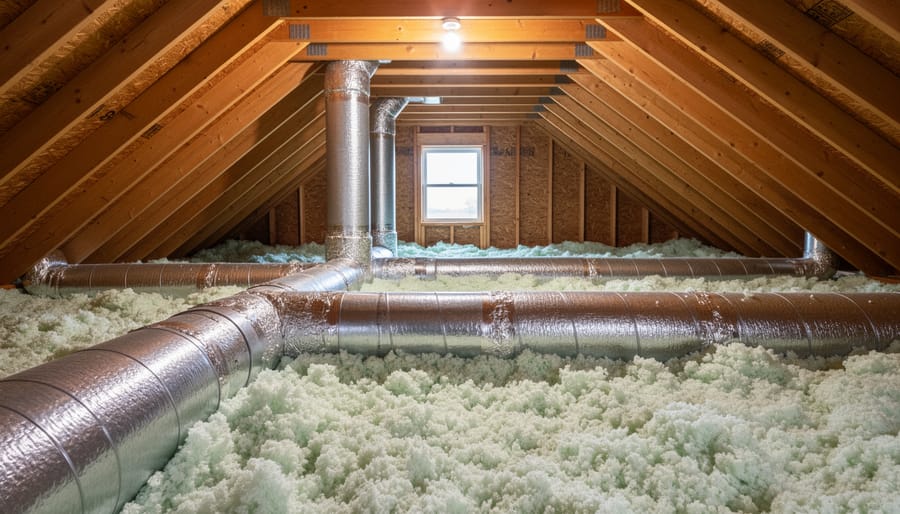
Before you spend a dollar on upgrades, find out where your energy is actually going. A professional home energy audit identifies improvements by checking for air leaks, thin insulation, aging equipment, and ductwork that loses conditioned air before it reaches your rooms. Auditors often use a blower door test, which depressurizes the building to reveal drafts, and an infrared camera that shows hidden heat loss.
The payoff is focus. Instead of guessing, you get a ranked list of fixes so your budget goes to the changes that cut the most energy.
In North Carolina, you have a few ways to start. Many utilities offer free or low-cost audits or online home energy checkups, so call your provider first. Certified independent auditors can do a deeper inspection for homes and businesses. Even a simple do-it-yourself walkthrough, feeling for drafts around windows and doors, is a useful first step.
2. Seal and Insulate to Stop Wasting Heating and Cooling
Heating and cooling make up a big share of most North Carolina energy bills, and leaky, under-insulated buildings waste a lot of it. Sealing and insulating is one of the most cost-effective ways to cut that waste, and it often pays back faster than bigger upgrades.
Start with air sealing. Caulk gaps around windows and doors, add weatherstripping to door frames, and seal where pipes and wires pass through walls and the attic floor. Next, look at your attic insulation. Insulation is rated by R-value, which simply measures how well it resists heat flow. A higher number means better resistance, so your home holds onto cool air in our hot summers and warm air in our mild-to-cold winters.
Many homeowners and businesses are surprised by how much they can save with sealing and insulation. Lower energy use means fewer emissions, and a more comfortable space too.
3. Switch to LEDs and ENERGY STAR Appliances
Swapping bulbs and appliances is about as painless as carbon reduction gets. LEDs (light-emitting diodes) use far less electricity than old incandescent bulbs and last many times longer, so you replace them less often too. Start with the fixtures you use most, like the kitchen, living room, and porch, and the savings show up on your next bill.
Appliances follow the same idea. The ENERGY STAR label is a government-backed certification, and ENERGY STAR products use less energy than standard models while still doing the same job. Your refrigerator, dishwasher, and washer run just as they always have, only with less power behind them.
The best part is that nothing about your routine changes. You flip the same switches and press the same buttons, and your electricity use quietly drops.
4. Install a Smart Thermostat for Automatic Savings
A smart thermostat does one simple job well: it stops you from heating or cooling a house nobody is in. Heating and cooling are usually the biggest slice of a home’s energy use, so even small adjustments add up.
A programmable model follows a schedule you set. A smart model learns your routine, connects to your phone, and can adjust on its own when you leave. Both help, and the best one is the one you’ll actually use.
For North Carolina, a few practical settings go a long way:
– Summer: try 78°F when you’re home and a few degrees warmer when you’re away.
– Winter: aim for about 68°F during the day and drop it several degrees overnight.
Many models cost under $200 and are easy to install yourself. If you’re short on budget, start here.
5. Go Solar With American-Made Panels and PV Systems
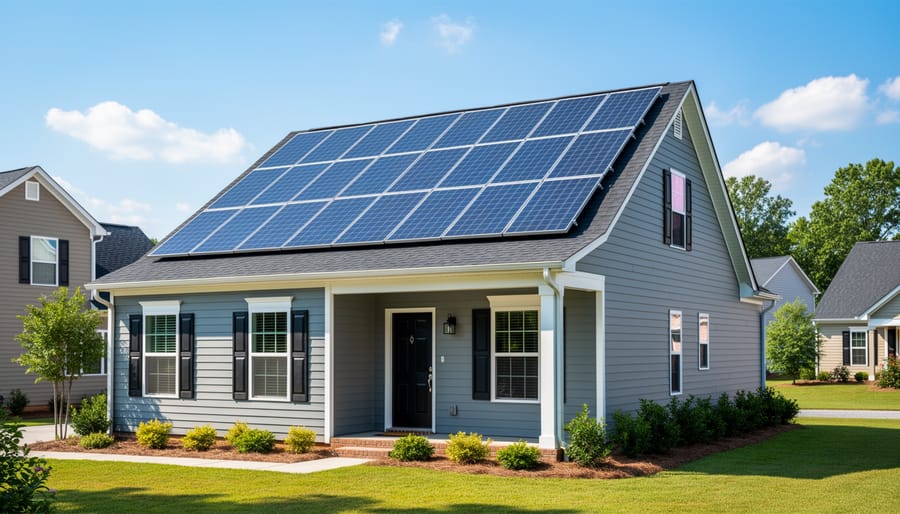
A photovoltaic (PV) system turns sunlight into electricity using solar cells made from silicon. When light hits those cells, it knocks electrons loose and creates a flow of direct current. An inverter then converts that into the alternating current your lights, fridge, and equipment actually use. Any extra power can flow back to the grid, which can lower your bill.
North Carolina is a strong fit for this. The state gets plenty of sunshine across the year, and solar panels keep producing on mild, partly cloudy days, not just in peak summer. Every kilowatt-hour you make on your own roof is one less drawn from the grid, which directly trims your carbon footprint.
Choosing American-made panels adds another layer of value. Buying domestically built equipment supports local manufacturing, keeps skilled jobs in the country, and often means a shorter supply chain. It’s a way to cut emissions and strengthen the community at the same time.
Federal and state tax incentives have historically helped offset the upfront price, though programs change, so check what’s currently available. To see what you might invest, take a look at our guides on residential solar cost and commercial solar cost. And if you’re curious how panels keep getting better, read up on the latest solar tech.
6. Heat Water With the Sun Using Solar Water Heating
Water heating is one of the biggest energy users in a typical home, often second only to heating and cooling. Every hot shower, load of laundry, and sinkful of dishes draws on it, so trimming that demand makes a real dent in your carbon footprint.
A solar water heater works on a simple idea. Panels called collectors sit on your roof and absorb sunlight, warming either water or a heat-carrying fluid that circulates through them. That heated water flows into an insulated storage tank, ready when you need it. On cloudy days or after a heavy evening of use, a conventional backup heater fills the gap, so you never run out.
This is different from solar electric panels. Solar water heating captures heat directly, which is why it can be so efficient for this one job.
It also suits businesses that use lots of hot water. Restaurants, gyms, laundromats, and salons run through gallons every day, so even a modest system can lower their energy use and utility bills over time.
7. Upgrade to a Heat Pump for Efficient Heating and Cooling
A heat pump is an electric system that heats and cools your space by moving heat instead of making it. In winter, it pulls warmth from the outdoor air, even on chilly days, and carries it inside. In summer, it reverses course and moves indoor heat outside, working like an air conditioner.
Because it transfers heat rather than burning fuel to create it, a heat pump can deliver two to three times more energy than the electricity it uses. That efficiency is what cuts emissions, especially as the grid gets cleaner.
North Carolina’s mild-to-moderate winters are a natural fit for this technology. Most of the state rarely sees the deep, prolonged cold that challenges older models, and today’s cold-climate units handle the mountains well too.
That said, natural gas, propane, and other heating sources still serve many homes reliably. If your current system is working, upgrade when it’s due for replacement. A heat pump pairs nicely with solar, too.
8. Rethink Transportation With Efficient Driving and Electric Vehicles
For most households, getting around is one of the biggest pieces of the carbon footprint, often rivaling everything you do inside the house. The good news is that you can chip away at it without buying a new car.
Start with how you drive. Smooth acceleration, steady speeds, and removing extra weight from the trunk all burn less fuel. Keeping tires properly inflated and staying current on oil changes helps too, since a well-maintained engine wastes less gas. Combine errands into one loop instead of making several short trips, because a cold engine is at its least efficient. Carpooling to work or sharing rides to community events cuts emissions per person almost in half.
When it’s time to replace a vehicle, an electric vehicle (EV) is worth a look. EVs produce no tailpipe emissions, and they cost less per mile to run than gas cars. If you already have rooftop solar, you can charge at home with sunshine you generate yourself, which makes the whole trip cleaner from start to finish.
9. Cut Waste: Water, Materials, and Everyday Habits
Some of the easiest carbon cuts cost almost nothing. Start with hot water, since heating it takes real energy. Shorter showers, low-flow showerheads, and washing laundry in cold water all shrink that demand right away.
Then look at what you throw away and what you buy. Recycling and composting keep waste out of landfills, where food scraps release methane, a potent greenhouse gas. Choosing durable, locally made products also trims the emissions that come from long shipping routes and constant replacements.
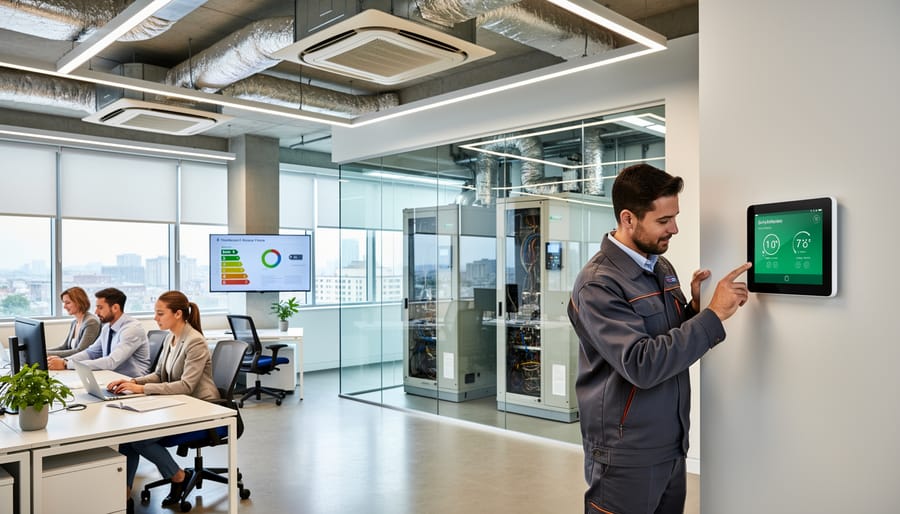
At the office or shop, small routines add up. Power down equipment at closing time, switch off lights in empty rooms, and ask your team for ideas. Many North Carolina towns run recycling drives and green initiatives, so joining one is a good way to share the effort with neighbors.
Common Questions About Reducing Your Carbon Footprint in North Carolina
Lots of readers ask us the same handful of things, so here are straight answers to the most common ones.
Where should I start if my budget is tight?
Begin with the free and low-cost moves: an energy audit, simple air sealing, and swapping in LEDs. These cost little and show you where your energy actually goes before you spend on anything bigger.
Should I make my home efficient before going solar?
Usually, yes. Sealing, insulating, and upgrading to ENERGY STAR appliances shrinks the amount of power you need, which can mean a smaller, more affordable solar system down the road.
How long do these upgrades take to pay off?
It varies by home and by how much energy you use. Small steps like LEDs and a smart thermostat tend to pay back fastest, while solar and heat pumps are longer-term investments, so an audit can help you set realistic expectations.
How can a small business get started?
Businesses can follow the same path: audit first, then lighting, thermostat, and insulation improvements. Solar water heating can also be a good fit for places like restaurants and gyms that use a lot of hot water.
You don’t need to tackle everything at once. Pick the question that sounds most like your situation, take that first step, and build from there. Local community workshops and your utility’s energy programs are friendly places to keep learning as you go.
Lasting carbon reduction rarely comes from one big move. It comes from stacking small habits, practical efficiency upgrades, and clean energy over time, and every step along the way counts. Maybe that’s an energy audit this month, a few LED bulbs this weekend, or simply planning your errands into fewer trips. You don’t need to tackle all nine strategies at once, and you don’t need to do it alone.
Pick one idea from this list and try it in the next few weeks. Then lean on the resources around you, from utility programs and local green initiatives to neighbors who’ve already made a few changes. North Carolina has a growing community of people sharing what works. If you’re curious about solar, solar water heating, or just where to begin, the team at Solar Installer Ninja is always glad to answer questions and help you think through your options, no pressure attached.
