
Solar Promotions News Update: What Changed and What to Watch in 2026
The landscape of solar incentives shifted dramatically in 2026 when the federal residential solar tax credit, which had covered up to 30% of installation costs, ended on December 31, 2025. If you’re a North Carolina homeowner paying cash or financing a solar system this year, that federal benefit is gone. But the opportunity to go solar hasn’t disappeared. Business owners still have access to substantial commercial tax credits covering 30% to 70% of system costs, and residential customers can capture indirect federal savings through solar leases or power purchase agreements, where the installer claims the credit and passes savings to you. State-level incentives, sales tax exemptions, and utility rebates remain in place across many regions, and American-made solar products continue to offer quality and long-term value. The key now is understanding which incentives you still qualify for and how to structure your solar investment to maximize available benefits. This guide breaks down what changed, what options remain open, and how North Carolina residents and business owners can move forward with confidence in a post-federal-credit environment.
What Changed: The End of the Federal Residential Solar Tax Credit
The biggest change to solar promotions in 2026 came at midnight on December 31, 2025, when the federal residential solar tax credit officially ended. This credit, which had allowed homeowners to claim up to 30% of their solar system cost on their federal taxes, is no longer available for any solar installation completed on or after January 1, 2026. The policy shift happened as part of broader changes to federal clean energy incentives, with several credits expiring December 31, 2025 across the renewable energy sector.
For North Carolina homeowners who buy their solar systems outright or finance them through traditional loans, this means the direct federal incentive they could have claimed in previous years simply doesn’t exist anymore. The change doesn’t affect systems installed before the deadline, but anyone starting a new residential solar project now faces a different financial landscape. The federal government eliminated this pathway as part of a broader policy realignment, though other incentive options remain for those willing to explore alternative financing structures or who qualify under different categories.
Key Developments in Solar Promotions for 2026
1. Alternative Pathways: Solar Leases and Power Purchase Agreements
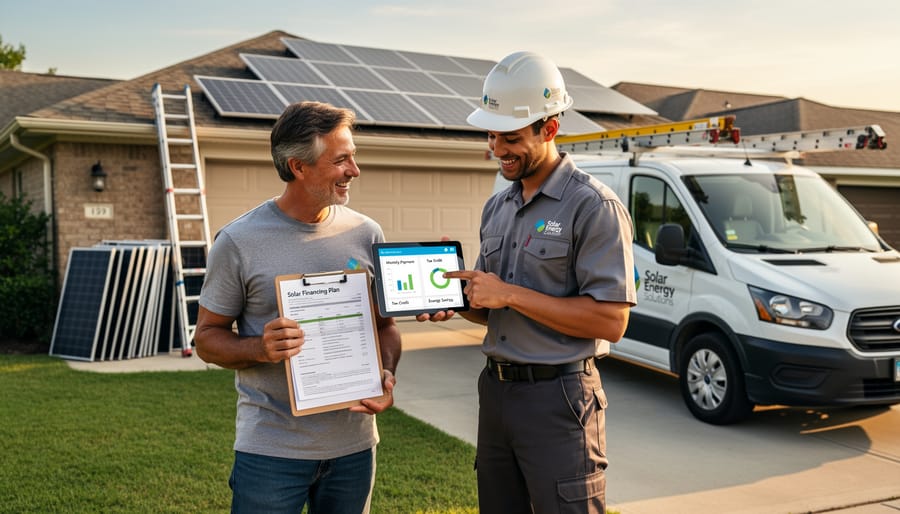
Even without the residential tax credit, solar leases and power purchase agreements (PPAs) offer homeowners a way to tap into federal savings they can’t claim directly. Here’s how it works: a solar company installs panels on your roof at no upfront cost, retains ownership of the system, and claims the commercial tax credit themselves. You pay either a fixed monthly lease fee or a per-kilowatt-hour rate for the electricity the panels produce. Because the installer captures the federal incentive, they can offer you lower rates than you’d pay the utility, passing along part of their savings.
The mechanics are straightforward. With a lease, you pay a set amount each month regardless of how much power the system generates. With a PPA, you pay only for the electricity you actually use from the panels, typically at a rate below your utility’s current price. Both agreements usually run 20 to 25 years, with the installer handling all maintenance and monitoring. You avoid the capital expense and tax-credit paperwork entirely.
These arrangements remain attractive in 2026 precisely because the residential credit vanished. If you don’t have cash on hand or prefer not to take out a loan, a lease or PPA delivers immediate savings on your electric bill without requiring you to own the equipment or navigate incentive forms. You still benefit from clean energy and lower monthly costs, you just do it through the installer’s tax advantage rather than your own. For homeowners who value simplicity and predictable payments, this pathway keeps solar accessible even as direct federal support has ended.
2. State and Local Incentives Remain Available
While the federal residential tax credit has disappeared, North Carolina homeowners haven’t lost all incentive options. State and local programs can still meaningfully reduce your solar installation costs, though the specific benefits depend heavily on where you live and which utility serves your home.
North Carolina itself offers several advantages that remain in place for 2026. The state exempts solar equipment from sales tax, which saves 4.75% off your upfront cost. Property tax exemptions mean your solar system won’t increase your home’s assessed value for tax purposes, protecting you from higher annual bills. Beyond these statewide benefits, individual utilities and municipalities sometimes offer additional rebates or performance payments.
State and local solar incentives typically include:
- State income tax credits (varying by state and year)
- Sales tax exemptions on solar equipment purchases
- Property tax exemptions that exclude solar system value from assessments
- Utility rebates for residential solar installations
- Performance-based incentives that pay you for energy produced
The catch is that these programs change frequently and vary by county, city, and utility territory. What’s available in Raleigh differs from Charlotte or Wilmington. Duke Energy’s programs don’t match those from electric cooperatives. The Database of State Incentives for Renewables & Efficiency maintains comprehensive details on North Carolina solar incentives and checking with your local installer ensures you know exactly which programs apply to your specific address. These state and local benefits won’t replace the full 30% federal credit that ended, but they can still shave thousands off your final cost.
3. Commercial Solar Investment Tax Credit Remains Strong
While residential solar shoppers face a new reality in 2026, the commercial sector still enjoys robust federal support. The commercial solar Investment Tax Credit (ITC) remains one of the most powerful incentives available, covering 30% to 70% of system cost for eligible projects. This credit is guaranteed through December 31, 2027, giving businesses, nonprofits, and agricultural operations a clear window to invest in solar energy with substantial federal backing.
This extended timeline offers strategic flexibility for larger installations that require phased planning and permitting. For operations weighing the decision, understanding how the ITC affects commercial solar cost is essential to building an accurate budget and financing plan.
The term “commercial” casts a wider net than many realize. Businesses of all sizes qualify, from small retail shops to industrial facilities. Tax-exempt entities like churches, schools, and community organizations can claim the credit through direct payment provisions. Agricultural operations, farms, orchards, vineyards, are explicitly included, recognizing that solar often makes economic sense for energy-intensive rural properties.
The percentage you receive depends on meeting specific criteria around domestic content and location in energy communities. Base projects qualify for 30%, but hitting the domestic manufacturing requirements or siting in designated areas can push that figure to 50% or higher. These adders reward American-made solar products and equipment, aligning federal policy with efforts to strengthen domestic production. Working with an experienced installer helps ensure you claim every dollar available under the current rules.
Why These Changes Matter for North Carolina Solar Buyers
The end of the federal residential tax credit fundamentally changes the math for North Carolina homeowners considering solar. Without that 30% federal incentive, upfront residential solar cost becomes the primary hurdle rather than a manageable investment with substantial tax recovery. This shift affects not just individual purchasing decisions, but the broader market for solar equipment.
Historically, federal incentives drove significant demand for solar installations, which in turn supported the growth of American manufacturing. When homeowners could recover 30% of their system cost through tax credits, they had more budget flexibility to prioritize quality equipment and domestically produced components. With that incentive gone for residential cash purchases, price sensitivity increases. Some buyers may be tempted to choose lower-cost imported panels over premium American-made systems, even though the long-term performance and American-made output typically deliver better value over a system’s 25-year lifespan.
For businesses in North Carolina, the picture looks different. The commercial solar ITC remains robust through at least 2027, meaning commercial buyers still have strong federal support for choosing high-quality, American-manufactured equipment. This creates a bifurcated market where commercial projects can prioritize performance and domestic content, while residential buyers face tougher trade-offs.
Community education becomes critical in this environment. North Carolina homeowners need clear information about alternative financing options like leases and PPAs that preserve access to federal benefits, as well as state and local programs that can partially offset the loss of the federal credit. Making informed choices requires understanding not just the immediate price tag, but the long-term energy production, warranty quality, and community impact of solar investments.
What to Watch: The Road Ahead for Solar Incentives
The solar incentive landscape will continue evolving through 2027 and beyond, making it essential to stay informed about policy shifts that could affect your investment. North Carolina homeowners should monitor state legislature sessions for potential new residential solar incentives or property tax programs that could emerge to fill the gap left by the federal credit. Your state energy office publishes updates on these developments, often months before they take effect.
Commercial buyers face a concrete deadline: the commercial solar Investment Tax Credit’s 30% to 70% coverage is only guaranteed through December 31, 2027. If you’re considering a business solar installation, timing matters. Projects that began construction before July 4, 2026, have an extended window until December 31, 2030, but new projects starting now have just over a year to lock in maximum savings. This compressed timeline means business owners should begin planning immediately rather than waiting for next year’s budget cycle.
Utility programs shift more frequently than federal policy. Duke Energy and other North Carolina utilities adjust their net metering rates, interconnection procedures, and rebate offerings on shorter cycles. Check your utility’s website quarterly, as even small program changes can significantly impact your system’s payback period.
Your best resource remains a trusted local solar installer with deep roots in North Carolina. They track policy changes as part of their daily business and can explain how new developments specifically affect your property. The state energy office website provides official updates, but experienced installers translate those changes into actionable guidance tailored to your situation.
Common Questions About Solar Promotions in 2026
Can I still get any federal help for home solar in 2026?
If you buy a solar system with cash or a loan in 2026, there is no federal tax credit available. However, if you’re open to a solar lease or power purchase agreement, you may still benefit from federal savings indirectly, since the company owning the system can claim the credit and pass along some savings to you.
What’s the difference between a solar lease and a PPA?
With a solar lease, you pay a fixed monthly amount to use the solar system installed on your property, regardless of how much electricity it produces. A power purchase agreement means you only pay for the actual electricity the system generates, typically at a lower rate than your utility charges.
Are there North Carolina-specific incentives I should know about?
Yes, state credits, sales tax exemptions, and utility incentives are still available depending on where you live. Contact your local solar installer or check with your utility company to learn what programs apply in your area, as these vary significantly across different regions of the state.
Does the commercial solar tax credit apply to farms?
Absolutely. Agricultural operations qualify for the commercial solar Investment Tax Credit, which covers 30% to 70% of system cost and is guaranteed through December 31, 2027. If your farm project began construction before July 4, 2026, it can qualify for the credit until December 31, 2030.
When should I act if I’m considering commercial solar?
The commercial ITC is only guaranteed through December 31, 2027, so businesses, nonprofits, and farms planning installations should move forward with their projects soon to lock in this substantial benefit. Working with a local installer now gives you time to design a system that fits your needs and budget while maximizing available incentives.
Beyond these common questions, homeowners often wonder whether waiting for new technology makes sense. While the latest solar tech continues to improve efficiency, delaying your decision means missing out on current state and local incentives that could change or end without notice. Today’s solar panels are highly efficient and reliable, backed by strong warranties that protect your investment for decades. The question isn’t whether the technology is good enough, it’s whether you’re ready to take control of your energy costs and reduce your environmental footprint with the incentives available right now.
The 2026 landscape for solar incentives looks different, but it’s far from closed. While the federal residential tax credit is no longer an option for direct purchases, North Carolina homeowners can still benefit through solar leases and PPAs, and businesses retain strong commercial credits through 2027. State and local programs continue to offer real savings, and the shift reinforces what we’ve always believed: going solar is a long-term investment in both your energy future and American manufacturing.
Now more than ever, education and local expertise matter. Understanding which financing path makes sense for your situation requires clear information and honest guidance, not hype. As you consider your options, focus on quality equipment built here at home and work with installers who take the time to explain how state incentives, utility programs, and commercial credits apply to your specific project. The federal landscape has changed, but the fundamentals haven’t: solar still makes financial sense, and supporting domestic production strengthens our communities and our energy independence. Stay informed, ask questions, and make decisions based on what works for you.
