
kWh Production of Solar Panels: What Homeowners Need to Know About American-Made Solar Output
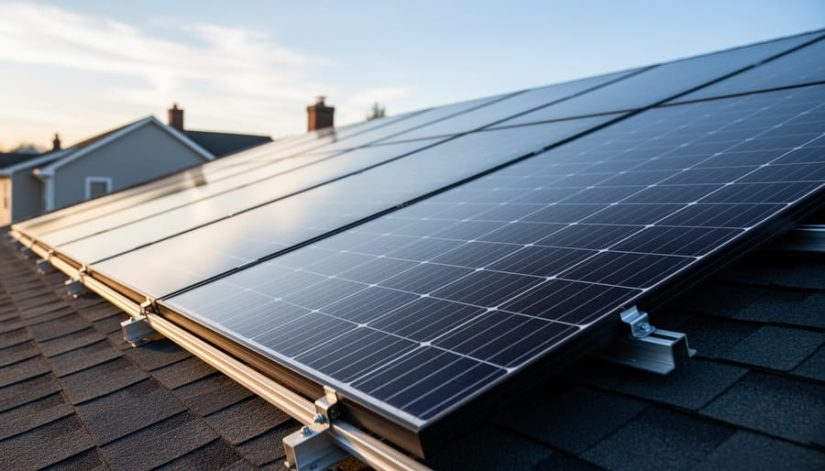
A single modern solar panel produces roughly 1.5 to 2.4 kilowatt-hours (kWh) per day, or about 45 to 72 kWh per month, depending on your location, roof angle, and how much direct sunlight your home receives. Most residential panels installed in 2026 are rated between 400 and 460 watts, operating at around 20 to 22 percent efficiency. That means if your panel is generating its full 400-watt capacity for one hour, you’ve produced 0.4 kWh of electricity.
These numbers matter because they determine how many panels you need to cover your electric bill and how quickly you’ll see a return on your investment. A household using 900 kWh per month, for instance, might need between 13 and 20 panels to meet that demand, but the actual count depends heavily on where you live and how your roof is oriented. North Carolina homeowners often see strong production thanks to favorable sun exposure, but there’s no substitute for understanding the real-world factors that influence your system’s output.
This is where solar education becomes essential. Knowing how to calculate your expected kWh production helps you size your system correctly, compare quotes confidently, and avoid overpaying for capacity you don’t need. You’ll also be better equipped to evaluate panel quality and whether American-made options offer performance advantages that justify their cost. The goal isn’t just to go solar, it’s to go solar intelligently, with a clear picture of what your panels will deliver year after year.
Understanding Solar Panel Power Ratings vs. Actual kWh Production
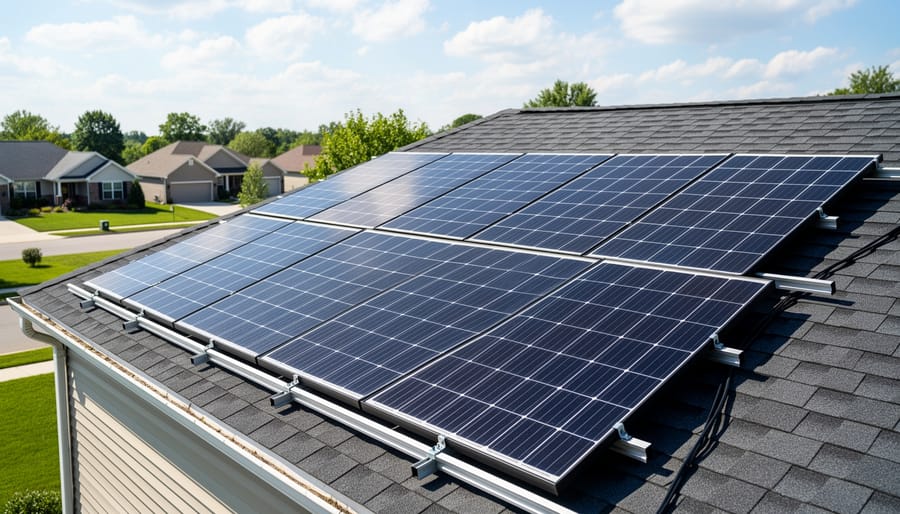
When you shop for solar panels, you’ll see them advertised by their power rating, typically 300 to 460 watts for modern residential panels. That wattage number tells you the panel’s maximum output under ideal laboratory conditions, but it doesn’t directly tell you how much electricity you’ll actually generate over time. To understand your real energy production, you need to think in terms of kilowatt-hours (kWh), which is how your utility company measures the electricity you use and how solar panels generate savings.
The conversion is straightforward: a panel’s wattage rating represents how much power it produces per hour under perfect conditions. Most panels quoted for home installations in 2026 fall between 400 and 460 watts, with 97% of quotes in late 2025 hitting that range. If your 400-watt panel operates at full capacity for one hour, it produces 400 watt-hours of electricity, or 0.4 kilowatt-hours.
In real-world conditions, that same panel won’t run at peak output all day. It generates less in morning and evening light, nothing at night, and varies with weather and seasons. That’s why a typical panel produces 1.5 to 2.4 kWh per day, or roughly 45 to 72 kWh per month, far less than multiplying 400 watts by 24 hours would suggest. Understanding this gap between rated capacity and actual output helps you size your system correctly and set realistic expectations. The latest solar tech continues improving efficiency, with most residential panels now operating in the 20 to 22% efficiency range, but the fundamental relationship between wattage and kWh production remains the same.
What Determines How Many kWh Your Solar Panels Will Produce
Panel Wattage and Efficiency
When you’re comparing solar panels, you’ll see two key numbers on the spec sheet: wattage and efficiency. Both tell you something important about how much electricity a panel can generate, but they work differently.
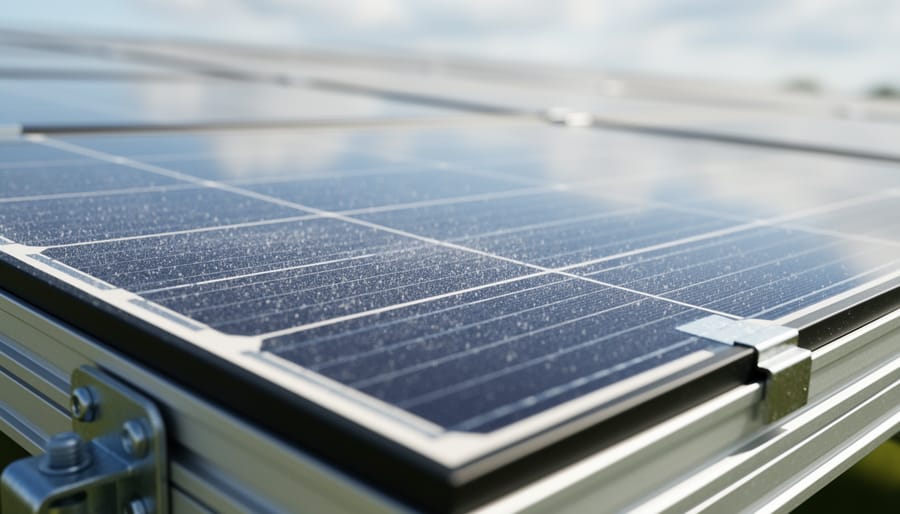
Wattage is the maximum power output under ideal test conditions. In 2026, most residential panels fall between 350 and 450 watts, with about 97% of quotes from late 2025 ranging from 400 to 460 watts. A 400-watt panel represents the current sweet spot, balancing performance with cost. Higher wattage means more power from each panel, which matters if your roof space is limited.
Efficiency measures how well a panel converts sunlight into electricity. Most residential panels today operate in the 20 to 22 percent efficiency range. That percentage tells you how much of the sun’s energy hitting the panel actually becomes usable power. A 22% efficient panel captures more energy from the same amount of sunlight compared to a 20% panel, though the real-world difference is often modest.
These specs directly affect your system’s output potential. A 400-watt panel producing electricity for one hour generates 0.4 kilowatt-hours. Over a typical day with good sun exposure, that same panel produces between 1.5 and 2.4 kWh, depending on conditions. Higher wattage and efficiency give you more production per panel, which means you might need fewer panels to meet your household’s energy needs.
Sunlight Hours and North Carolina Solar Conditions
Peak sun hours measure the equivalent time per day your panels receive sunlight at 1,000 watts per square meter, the intensity used to rate panel output. North Carolina averages about 4.5 to 5.5 peak sun hours daily, though this varies considerably across the state and throughout the year.
Coastal areas typically see more consistent sunlight than mountain regions, where weather patterns can be less predictable. This explains why a 400-watt panel rated to produce 0.4 kWh per hour of full sunlight generates closer to 1.8 to 2.2 kWh on an average day, not the theoretical 9.6 kWh you’d get if it ran at full capacity for 24 hours.
Seasonal swings are significant. Summer days deliver 6 or more peak sun hours with longer daylight, while winter might drop to 3.5 or 4 peak hours as the sun sits lower in the sky and days shorten. A system producing 900 kWh in July might generate only 550 kWh in December.
Weather patterns matter too. North Carolina’s humid subtropical climate means afternoon thunderstorms in summer and occasional winter cloud cover, both cutting into daily production. Panels still generate electricity on overcast days, but output drops to 10-25% of clear-sky performance.
Understanding your local peak sun hours helps set realistic expectations for system sizing and lets you anticipate monthly production variations throughout the year.
Installation Factors: Roof Angle, Direction, and Shading
Where you mount your panels matters as much as which panels you choose. A high-quality American-made panel installed in a shaded spot will underperform a less efficient model in full sun, installation choices directly shape how many kWh your system delivers.
South-facing roofs produce the most energy in North Carolina. Panels installed facing true south capture sunlight throughout the day, maximizing production during peak hours. East or west orientations still work but typically generate 10-20% less annually. North-facing installations should be avoided, they produce significantly less and rarely justify the investment.
Roof pitch affects solar PV performance though the impact is often overstated. A tilt angle matching your latitude (around 35 degrees for most of North Carolina) is optimal, but roofs between 15 and 40 degrees all perform well. Flatter roofs lose some winter production; steeper pitches sacrifice summer efficiency. Most residential roof slopes fall within an acceptable range.
Shading destroys production. Even partial shade from a single tree branch can cut a panel’s output by 50% or more, and shaded panels can reduce production across an entire string of connected panels. Before installation, assess morning and afternoon shadows throughout the year. Trimming overhanging branches or repositioning panels away from chimneys and vents often recovers significant kWh output.
Quality and Manufacturing Standards
Panel quality directly impacts how reliably your system delivers its rated kWh production over 25-plus years. American-made panels consistently meet stricter manufacturing tolerances, meaning the 400W panel you install performs closer to its specification than budget imports that may underperform from day one. Domestic manufacturers typically subject panels to more rigorous testing protocols, thermal cycling, humidity exposure, mechanical stress, ensuring they withstand North Carolina’s weather extremes without degradation spikes. This translates to predictable energy output year after year. You’re also buying accountability: when production dips or warranty claims arise, U.S. manufacturers provide responsive support rather than lengthy overseas communication chains. Beyond performance, choosing American-made panels supports local jobs and reduces the carbon footprint of shipping products halfway around the world, aligning your solar investment with both energy independence and community values.
Calculating Your Solar Panel System’s Total kWh Output
Figuring out how much electricity your entire solar array will produce starts with simple multiplication. Once you know what a single panel can generate, you scale that up by the number of panels in your system. This straightforward calculation helps you understand whether a proposed system will meet your household’s energy needs.
Here’s the basic process to estimate your system’s total output:
- Determine your panel wattage: Most quotes in 2026 feature panels between 400 and 460 watts, with 420W being a common standard.
- Estimate daily sun hours: In North Carolina, you’ll typically see 4-5 peak sun hours per day on average, accounting for seasonal variation.
- Calculate single-panel kWh: Multiply wattage by sun hours, then divide by 1,000. A 420W panel × 4.5 hours = 1,890 watt-hours, or 1.89 kWh per day.
- Multiply by number of panels: Take your per-panel production and multiply by total panels in the system.
- Account for system losses: Reduce your calculation by 15-20% to reflect real-world inefficiencies from wiring, inverter conversion, temperature effects, and dust accumulation.
Let’s look at two common residential configurations. A 10-panel system using 420W panels would theoretically produce 18.9 kWh daily (10 × 1.89 kWh). After applying a 20% system loss factor, expect about 15 kWh per day, or roughly 450 kWh monthly. That covers a modest household’s consumption.
A larger 20-panel system doubles those numbers: approximately 30 kWh daily or 900 kWh per month after losses. This works well for homes with higher energy use or those wanting to offset air conditioning loads during summer months.
Compare these estimates to your electric bills. The average North Carolina home uses around 1,000 kWh monthly, though consumption varies widely. If your bills show 850 kWh per month, an 18-panel system might cover most of your needs. Understanding this relationship between production and consumption helps you right-size your investment when evaluating residential solar cost versus long-term savings.
Remember that these calculations provide estimates, not guarantees. Your installer should provide production modeling specific to your roof’s characteristics and local conditions, giving you confidence in what your system will actually deliver year-round.
Maximizing kWh Production from Your Solar Investment
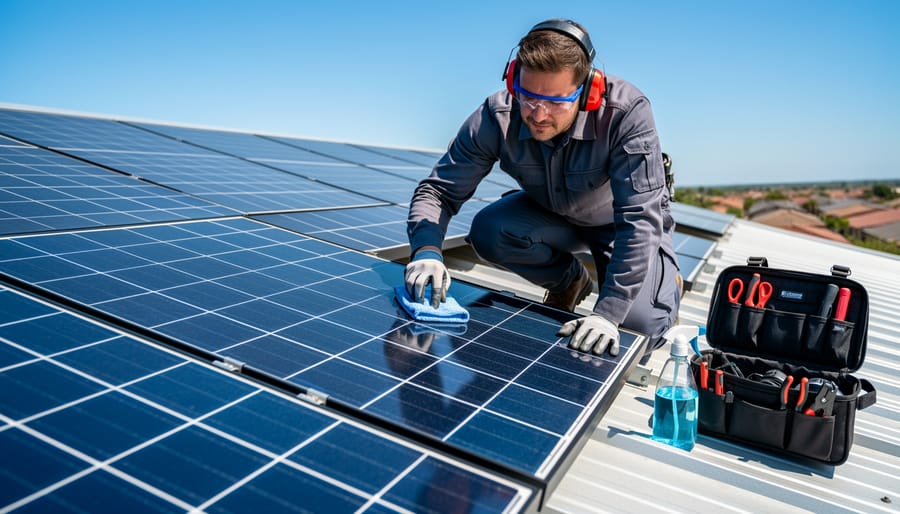
Once your panels are installed, a few straightforward practices can help maintain peak production and protect your investment over the 25-plus years they’ll be generating power.
Monitor your system regularly through the app or dashboard your installer provides. Most modern systems track daily and monthly kWh output, making it easy to spot unexpected drops that signal a problem. If production falls below your typical range for more than a few days, and weather isn’t the cause, contact your installer to investigate.
Keep panels reasonably clean. Dust, pollen, leaves, and bird droppings block sunlight and reduce output. In most climates, rain handles basic cleaning, but if you notice visible buildup or live in a dusty area, a gentle rinse with a hose from ground level a few times a year helps. Never walk on panels or use abrasive tools. If your roof isn’t safely accessible, hire a professional cleaning service familiar with solar equipment.
Manage shade aggressively. A single shaded cell can reduce an entire panel’s output. Trim back tree branches as they grow, especially those casting shadows during peak sun hours. What looked clear at installation can become a shade problem within a year or two as trees mature.
Schedule annual inspections with your installer. They’ll check electrical connections, mounting hardware, and inverter performance, catching small issues before they cost you production. Quality installers stand behind their work and often include this service in extended maintenance plans.
Choose your installer carefully from the start. Experienced professionals design systems to maximize your site’s production potential, use components built to last, and provide responsive support when you need it. Proper installation sets the foundation for decades of reliable energy generation, making that upfront choice the single most important factor in long-term performance.
Why American-Made Panels Matter for Consistent Production
American-made solar panels deliver more than patriotic appeal, they bring manufacturing precision that directly affects your kWh production over the system’s lifetime. Domestic manufacturers typically maintain tighter quality control standards throughout production, resulting in more consistent cell performance and fewer output variations between panels. This consistency matters because even slight manufacturing defects or quality inconsistencies can reduce energy generation by 5-10% over 25 years, cutting into your ROI and payback timeline.
Warranty support represents another practical advantage. When panels come from American factories, you’re dealing with companies that maintain a physical presence here, making warranty claims and technical support far more straightforward. If a panel underperforms or fails, you won’t navigate international shipping, language barriers, or companies that may have dissolved by year ten of your warranty period.
Product consistency extends to replacement scenarios too. If you need to add panels later or replace a damaged unit, domestic manufacturers are more likely to still produce compatible models with matching specs, ensuring your system continues generating at expected levels. Foreign manufacturers frequently discontinue product lines, leaving homeowners scrambling for compatible replacements that maintain system balance.
Beyond individual performance, choosing American-made panels supports the manufacturing jobs and expertise that keep solar innovation advancing here at home. Every domestically produced panel strengthens the supply chain that makes reliable solar accessible to North Carolina communities, creating a cycle where quality products build trust in renewable energy while supporting local economic growth.
Common Questions About Solar Panel kWh Production
Solar panels continue to be a significant investment for North Carolina homeowners, and understanding their actual production capabilities raises plenty of practical questions. Here are the answers to what we hear most often from folks considering solar for their homes.
Do solar panels still produce energy on cloudy days?
Yes, panels generate electricity even when it’s overcast, though at reduced levels, typically 10-25% of their peak output. North Carolina’s mix of sunny and cloudy days means your system will produce varying amounts throughout the year, but it keeps working regardless of weather.
How much does production change between summer and winter?
Summer months typically see 30-40% higher production than winter due to longer days and more direct sunlight angles. Your panels will still generate meaningful energy in December and January, just less per day than in June or July.
Can my solar system really cover my entire electric bill?
Many homeowners achieve 80-100% coverage with proper system sizing, though this depends on your household consumption, roof space, and budget. Working with an experienced installer to match your panels to your actual usage patterns, factoring in system sizing costs ensures you get the right production level for your needs.
What happens when my panels produce more electricity than I’m using?
In North Carolina, excess production typically flows back to the grid through net metering, earning you credits on your utility bill that offset what you draw when panels aren’t producing. This banking system helps balance seasonal variations and nighttime usage.
When will my panels start producing less energy?
Quality panels degrade slowly, losing roughly 0.5% of their output capacity per year. After 25 years, most panels still operate at 85-90% of their original production, which is why manufacturers back them with performance warranties spanning decades.
The degradation question matters particularly when considering panel quality. American-made panels often feature more conservative degradation rates and longer warranty coverage because domestic manufacturers stake their reputation on long-term performance rather than racing to the bottom on price.
Temperature also affects production in ways that surprise homeowners. While you’d think summer heat would boost output, panels actually work more efficiently in cooler conditions. A cold, sunny February day can yield better production per hour than a scorching August afternoon, even though summer’s longer daylight hours usually win overall for total monthly generation.
Understanding how many kWh your solar panels will produce puts you in control of your energy future. A typical modern panel generating 1.5 to 2.4 kWh per day might seem like just a number, but it represents real savings on your electric bill and a measurable step toward energy independence. When you know what affects that output, panel wattage, your roof’s orientation, local sunlight conditions, and panel quality, you can make confident decisions about system size and expected performance.
Choosing American-made solar products means you’re investing in consistent manufacturing standards and reliable long-term production. It also means supporting your local economy and building a stronger renewable energy infrastructure right here in North Carolina. Every home that goes solar reduces demand on the grid, cuts carbon emissions, and demonstrates to neighbors that clean energy is practical and achievable.
Work with experienced local installers who understand our climate and prioritize quality American-made panels. They’ll help you design a system that delivers the kWh production your household needs while contributing to a cleaner, more sustainable community for everyone.
